
How to track blood pressure at home accurately
A home blood pressure monitor only helps if the cuff is used well. Small mistakes in posture, cuff size, or timing can shift a reading by 10–20 mmHg.
Choose the right monitor
Validated upper-arm cuffs are generally preferred over wrist monitors for routine home logs. Look for validation from organizations such as STRIDE BP, the British and Irish Hypertension Society, or equivalent lists your clinician trusts.
Get the cuff size right
A cuff that is too small often reads high; too large often reads low. Measure upper-arm circumference and match the cuff range (many adults need medium 22–32 cm or large 32–42 cm).
Prepare for five minutes
- Sit quietly. Empty your bladder first.
- Avoid coffee, exercise, or smoking in the 30 minutes before a check.
- Back supported, feet flat, arm at heart height.
Take two readings
Wait a minute between checks and log both, or the average, if that is what your clinician asked for. Measure at consistent times — morning and evening is a common home schedule.
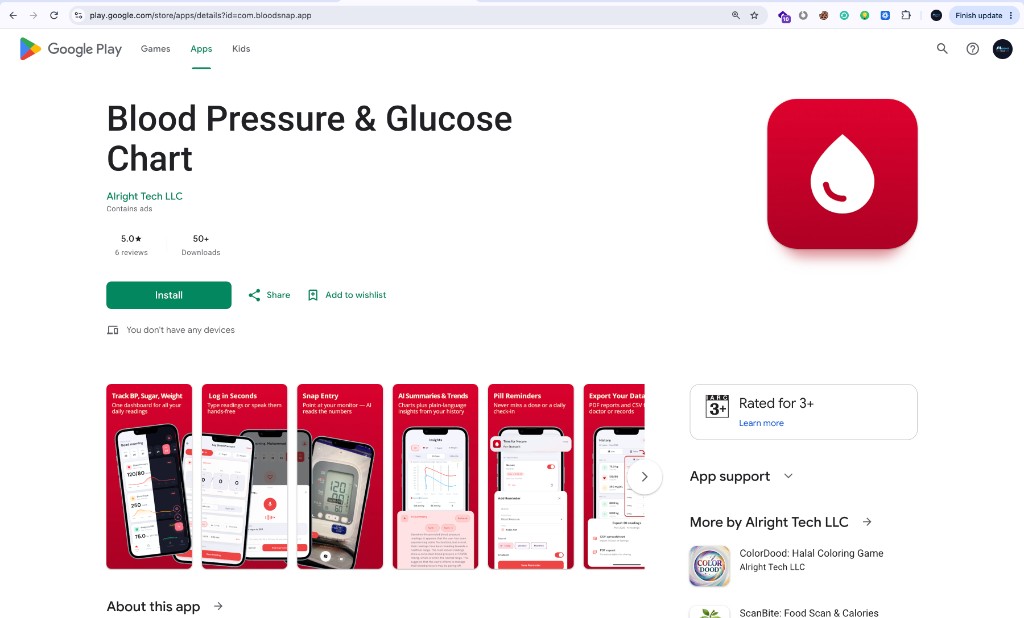
Log this in Blood Snap. Type the numbers from your cuff or snap a photo of the monitor screen and confirm before save. Export PDF for the visit.
Educational information with public guideline citations. Not medical advice and not a diagnosis. Blood Snap is a personal wellness diary — not a medical device, blood pressure machine, glucometer, or CGM. Always follow your clinician's advice.